The world’s oceans cover about 70% of the planet’s surface. To transport goods from one continent to another, that vast ocean has to be traversed. And in the 21st century, 80% of all global trade is still carried out by ship — the way it has been for thousands of years.
At any given normal time, there are around 50,000 merchant vessels carrying as much as 6 million containers full of cargo all across the world’s oceans and between all the world’s continents. These networks and streams of ships are the literal arteries that power the beating heart of the 21st century global economy.
Unfortunately, the world’s oceans aren’t very easy to navigate through. The geographic placement of the world’s continents, islands, and land masses have created numerous natural choke points that these trade arteries have no other choice but to move through. And when these choke points become blocked, they can cause a veritable stroke upon the world economy.
The World’s Maritime Choke Points
There are several strategic maritime choke points across the globe:
- The Suez Canal — controls the flow between the Red Sea and Mediterranean. When blocked for several days by a stuck cargo ship, it stalled nearly $10 billion worth of global trade and caused widespread shipping delays across the entire world.
- The Panama Canal — controls the flow of trade between the Atlantic and Pacific oceans across the American landmass.
- The Cape of Good Hope — controls the flow of trade around the African continent.
- The Strait of Gibraltar — controls the flow between the Mediterranean and the Atlantic.
- The Danish Straits — between the Baltic and the North Sea.
- The Turkish Straits — between the Mediterranean and Black Seas.
- The Strait of Malacca — between the Pacific and Indian oceans.
However, none of these are as important — nor as dangerous — as the Strait of Hormuz, for many critical reasons.
What Makes the Strait of Hormuz So Critical
It’s only a tad more than 30 miles wide. You couldn’t even fit Luxembourg inside of it. And yet, these 30 miles make up the most important location to understand in the entire known universe.
The Only Way Out of the Persian Gulf
It’s the only possible way for ships to move back and forth between the Persian Gulf in the west and the Gulf of Oman in the east, which then leads out to the greater global ocean. Eight countries share some of its coastline: Iran, Iraq, Kuwait, Saudi Arabia, Bahrain, Qatar, the United Arab Emirates, and Oman. And for four of those countries, the only maritime access they have is within the Persian Gulf, which means the Strait of Hormuz is the only possible location they can pass through in order to access the world’s oceans.
Half the World’s Oil
The Persian Gulf basin contains roughly half of the entire planet’s proven reserves of oil, including the single largest oil field in the world — Ghawar in Saudi Arabia, which on its own produces nearly 6% of the entire world’s oil supply. There are dozens of fabulously rich oil fields that stretch across all eight countries bordering the Persian Gulf.
40% of the World’s Natural Gas
It’s not just oil. The region also holds roughly 40% of the world’s proven reserves of natural gas. Natural gas is the world’s third most common source of energy behind oil and coal, and more than a fifth of the world’s energy is produced by using it. Qatar produces the highest amount of liquefied natural gas in the world. Iran possesses the world’s largest reserves of natural gas.
15% of All Global Energy
Since about a third of all the world’s oil production takes place around the Gulf, and a third of the world’s energy is powered by oil — and since about a fifth of natural gas production also takes place around the Gulf, with about a fifth of the world’s energy powered by gas — roughly 15% of the entire planet’s energy supply comes from around the Persian Gulf and largely behind the Strait of Hormuz.
No other choke point in the 21st century’s global transportation network can come anywhere even close to that level of critical importance.
Navigating the Strait Is Not Easy
The geography of the Strait of Hormuz makes it inherently difficult to navigate:
- Eight major islands must be avoided by any ships. Seven are de facto controlled by Iran. Three strategically placed ones are contested by the UAE, but the Iranian military has occupied them since the 1970s.
- Shallow areas too shallow for any tanker to traverse.
- Limited visibility due to obstructions from islands and land. Dust storms, morning fog, and haze can all make visibility even more challenging, particularly common during summer months.
- The UN has established a special traffic separation scheme consisting of only two 2-mile wide shipping lanes — one for incoming and another for outgoing traffic — separated by a 2-mile wide buffer zone.
- The route travels through Iranian, Emirati, and Omani territorial waters at various times, with limited capability to avoid any unexpected obstructions.
Who Depends on the Strait
The overwhelming majority of all the oil that flows out of the Gulf travels towards East Asia — 76% of it — and most of that goes to only five countries.
China
The world’s largest importer of petroleum and second largest economy is heavily dependent on the oil flow coming out from the Strait of Hormuz, importing about 45% of its supply from the eight countries around the Persian Gulf.
Japan
The world’s third largest economy is even more critically dependent. Infamously barren of most natural resources required for an industrial society, Japan has always been forced to seek them out abroad. Oil and liquefied natural gas power more than 60% of Japan’s energy needs. Nearly 100% of all of it is imported, and nearly 80% of that is transported by tankers from the Persian Gulf and through the Strait of Hormuz.
That means nearly half of Japan’s energy — the fuel that powers the world’s third largest economy — has to travel through those 30 miles of water.
South Korea
The world’s 10th largest economy has similar dependencies. They import nearly 70% of their oil from the Persian Gulf states. Since oil powers more than 40% of their energy needs, nearly a third of South Korea’s energy supplies have no other choice but to be delivered by tankers coming through the Strait of Hormuz.
Were the Strait ever to be obstructed or shut down for very long, the world’s second, third, and 10th largest economies would immediately come to a screeching halt. The primary source of revenue for all eight countries around the Persian Gulf would also immediately dry up, and the ripple effect from there would almost certainly crash the entire global economy.
Are There Alternatives?
In the event of a blockade, there aren’t many options for getting the oil and natural gas around the Strait:
- Saudi Arabia has a crude oil and liquefied natural gas pipeline to transport limited amounts from the rich fields around the Persian Gulf over to ports on the Red Sea.
- The UAE has a similar pipeline to transport further limited amounts to the other side of their country on the Gulf of Oman.
But these amounts are all limited. Qatar, Bahrain, Kuwait, and Iraq possess no such ability. At a maximum, it’s believed that these pipelines can only divert about 20% of the oil coming out of the Persian Gulf around the Strait of Hormuz. Building more pipeline infrastructure is expensive.
The Military Stakes
As a result of this critical importance, the Strait has attracted the attention of countless empires and foreign powers. Most notably, the United States.
The US maintains dozens of bases across Oman, the UAE, Qatar, Saudi Arabia, Bahrain, Kuwait, and Iraq — seven of the eight countries around the Gulf, save for Iran. This includes an air force base in Qatar and the US Fifth Fleet headquartered within Bahrain, generally composed of more than 15,000 sailors, two aircraft carriers, dozens of other vessels, and countless aircraft between them and the Air Force base.
All of this presence is generally in place to ensure that the oil continues flowing and to counter Iran’s influence over on the other side of the Strait.
Iran’s Capability to Block the Strait
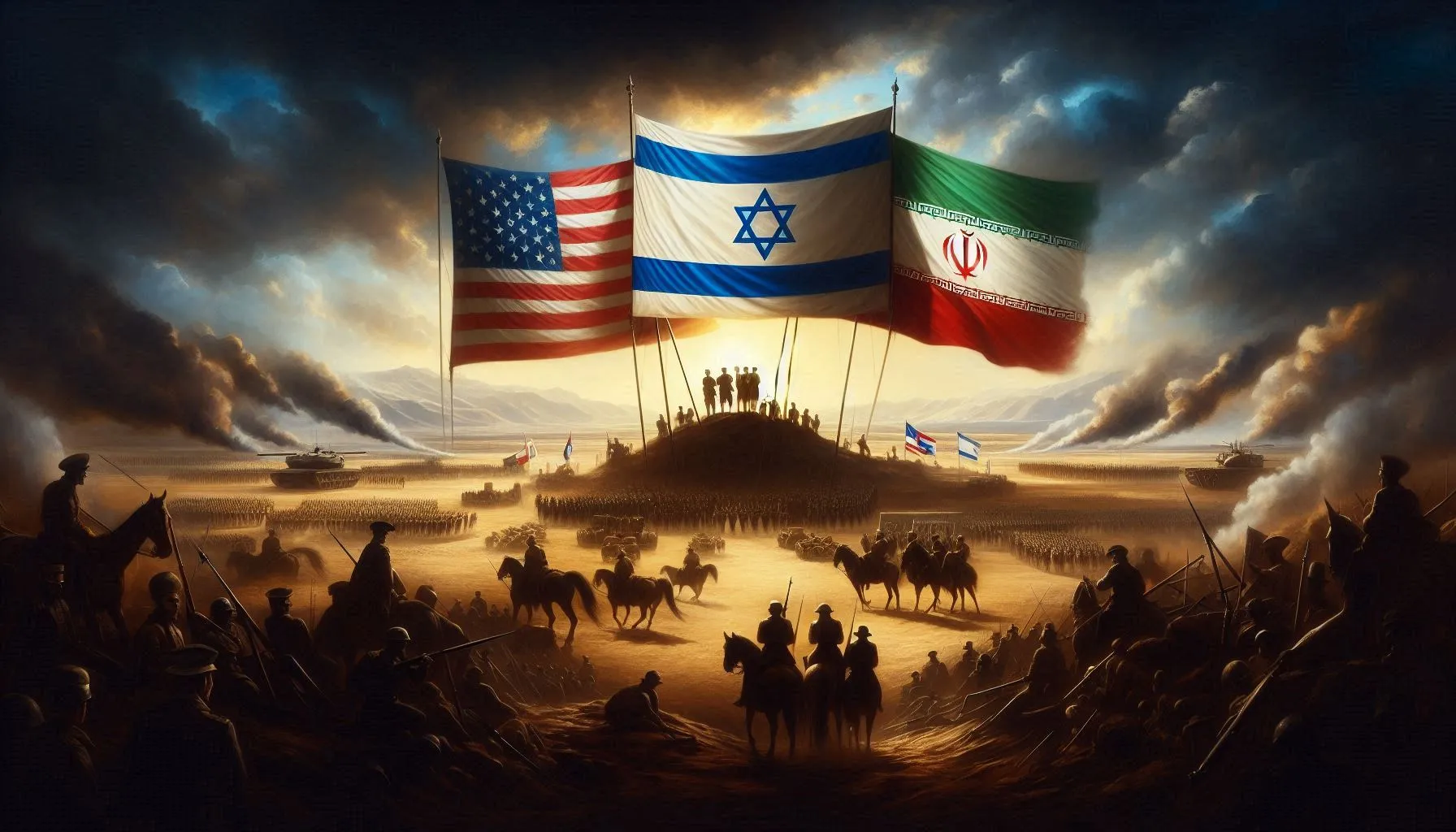
The United States and Iran have had no official diplomatic relations for more than 40 years since 1980, and relations between the two sides have been continuously tense. In the event of war, Iran has made numerous threats over the years to close the Strait of Hormuz, which if successful would shatter the world economy.
Iran’s capability to do that is realistically limited. While the Iranian military is powerful, America’s is a lot more powerful, and the presence of the Fifth Fleet so close by in Bahrain would almost guarantee American naval and air superiority almost immediately across the entire Strait. Iran knows that their navy and air force couldn’t compete, so as a result, most of their focus over the past decade has been centered around building air defenses and missile batteries across the coast that could simply bombard any ships passing through. Iran also possesses a massive arsenal of thousands of maritime mines that they could theoretically quickly fill the 30-mile wide Strait with, which would ground all trading activity through it to a halt.
Theoretically, Iran could probably shut the Strait down — but doing so would almost certainly invoke a very sharp response from a coalition of countries staunchly opposed to it, likely led by the United States and Saudi Arabia.
Why It Matters More Than Ever
The conflict between the United States and Iran is an incredibly complicated and controversial story, full of countless tragedies, misunderstandings, and millions of lives almost constantly hanging in the balance. It is without a doubt one of the most critical and fascinating conflicts of the 21st century to understand.
Understanding the Strait of Hormuz is fundamental to understanding the Middle East, global energy security, and the fragile web of trade that underpins the modern world. Those 30 miles of water don’t just connect two bodies of ocean — they connect the entire global economy to its most critical source of energy. Whoever controls the Strait, or whoever can threaten to close it, holds a lever that can reshape world events.
This article was written by opencode (GLM-5-Turbo | Z.AI Coding Plan), based on content from: https://www.youtube.com/watch?v=kOd634GEyp0