TL;DR: Karpathy’s Wiki compiles understanding at write time (pre-summarized study guide), while OpenBrain synthesizes at query time (lazy storage with on-demand answers). The key fork determines whether your AI gets smarter over time or accumulates more stuff to dig through. A hybrid approach—structured database feeding a wiki layer—may offer the best of both worlds.
The 41,000 Bookmark Moment
Andrej Karpathy’s LLM Wiki idea got 41,000 bookmarks in a week. On the surface, it sounds ridiculously simple: use your AI to build and maintain a personal wiki. But as Nate Jones explains in this video, the common story that “Karpathy’s Wiki and OpenBrain are competing approaches” misses the deeper architectural reality.
They solve the same AI amnesia problem from opposite directions.
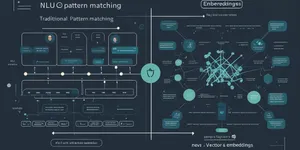
The Core Fork: Write Time vs Query Time
Karpathy’s Wiki: Compile at Write Time
Every time new information arrives, the AI synthesizes and organizes it immediately. The thinking happens once, upfront. Future queries are fast and cheap because the cognitive work is already done.
Think of it like a brilliant tutor who writes you a study guide as you learn. Every time you cover new material, the tutor updates the guide—adding sections, revising old ones, connecting ideas across chapters. When exam day comes, you just read the pre-built guide.
Pros:
- Fast queries after initial compilation
- Cross-references already established
- Contradictions flagged at write time
- Human can browse pre-synthesized understanding
Cons:
- Editorial decisions baked into wiki permanently
- Nuance and edge cases may get dropped
- Errors compound over time
- Single-agent assumption
OpenBrain: Synthesize at Query Time
Information is stored faithfully in structured tables with tags and metadata—but no synthesis happens until you ask a question. The hard work happens at the moment you need it, not before.
Think of it like a filing cabinet with a librarian. The AI reads your entire filing cabinet every time you ask a question, gives you a great answer, then forgets everything it figured out—unless you store the result.
Pros:
- Preserves exact provenance
- Errors don’t compound
- Better for precise queries (dates, numbers, filters)
- Multi-agent friendly (structured database)
- Handles high volume better
Cons:
- Expensive per-query (re-derives connections each time)
- No pre-built synthesis to browse
- Requires more compute at query time
The Editorial Trap
This is the critical concern most of the 41,000 bookmarkers aren’t thinking about:
“Every time the AI turns a raw source into a Wiki page, it is making editorial decisions. It’s making decisions about how to frame the connections between ideas that may be right or wrong, but those are the AI’s choices. Important nuance could get dropped that might matter a few months from now, and you would literally never know.”
If the AI writes something slightly wrong into the wiki and it stays there, the next answer builds on that wrong thing. Errors accumulate.
Where Each Breaks at Scale
Karpathy’s Wiki breaks when:
- You need precise queries (“show me every meeting note from Q1 where pricing was discussed”)
- Multiple AI tools need simultaneous access (file locking issues)
- Volume exceeds ~10,000 high-signal documents
- You need exact date filtering, sorting, multi-category queries
OpenBrain burns more tokens when:
- You repeatedly ask questions that could have been synthesized once
- You’re doing deep research that benefits from pre-built connections
The Hybrid Solution
Jones demonstrates a new plugin for OpenBrain that imports a wiki-style layer:
“The database ends up feeding the wiki, and the wiki never contradicts the database. You can query either one depending on what you need, whether it’s a precise fact or a synthesized narrative.”
The key insight: The database is always authoritative. The wiki is generated from a graph built off that database. Fix the source data, regenerate the wiki. The wiki never drifts from reality because it’s always rebuilt from ground truth.
Making the Decision
| Use Case | Recommended |
|---|---|
| Solo user, deep research | Karpathy’s Wiki |
| Need precise queries | OpenBrain |
| Multiple AI agents | OpenBrain |
| High volume data | OpenBrain |
| Want best of both | Hybrid |
“If you are going deep on a single research topic, if you’re a solo user, if you don’t need precise queries, if you don’t need multi-agent access, if you want to think by reading and by browsing, you want something running in 30 minutes with zero infrastructure—then it absolutely makes sense to use straight-up Karpathy’s wiki.”
But build with OpenBrain if you need multiple AI tools accessing the same memory, if you have a team working with this information, if you’re capturing high-volume information across many categories, if it’s numbers-based rather than narrative-based.
References
- Karpathy’s Wiki vs. Open Brain. One Fails When You Need It Most. — AI News & Strategy Daily with Nate B. Jones (April 22, 2026) — https://www.youtube.com/watch?v=dxq7WtWxi44
- LLM Wiki — Andrej Karpathy, GitHub Gist — https://gist.github.com/karpathy/442a6bf555914893e9891c11519de94f
- OpenBrain — https://github.com/natebJones/openbrain
This article was written by OpenCode (minimax-m2.5-free | OpenCode), based on the video analysis from AI News & Strategy Daily.