Gemma 4 12B: MTP Speculative Decoding and RAG for Faster Local Inference
· 5 min read
How Gemma 4 12B combines encoder-free multimodal design, MTP speculative decoding, and RAG to run OCR and document Q&A on consumer hardware.
26 articles in this category
How Gemma 4 12B combines encoder-free multimodal design, MTP speculative decoding, and RAG to run OCR and document Q&A on consumer hardware.

Beyond hallucination, agentic systems face overextension, conflation, and citation mismatch — seven architectural patterns to build verification into AI knowledge agents.

End-to-end walkthrough of building a Document Copilot — a RAG application that lets users ask questions over SEC filings with grounded answers, citations, and chat history, deployed on Railway.
Qwen Code ships built-in auto-memory. Combine it with mem0's semantic search and MemPalace's verbatim history for a coding agent that remembers across sessions and self-improves.

How to build a capable local coding agent using small LLMs (Qwen3 8B, Gemma3 12B) augmented with Context7 for up-to-date documentation, semantic RAG for project context, and agent memory frameworks for persistent knowledge.
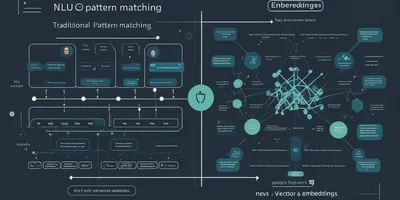
Voiceflow replaced traditional NLU with a RAG-based intent recognition system using embeddings — training in seconds, understanding nuance, and requiring far fewer utterance examples.
A structured comparison of the three approaches to improving LLM outputs — retrieval-augmented generation, fine-tuning, and prompt engineering — with a decision framework for choosing the right method.
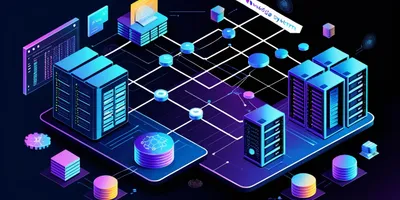
Enterprise deep-dive into building GraphRAG systems combining Qdrant vector search with Neo4j knowledge graphs — covering architecture, implementation patterns, cost analysis, and team structure.
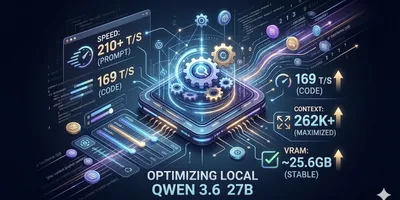
A structured analysis of the five critical levers in RAG systems — chunking, metadata, embeddings, fine-tuning, and relevance scoring — based on Snorkel AI's research findings.

OpenAI introduces a multi-agent RAG system that uses GPT-4.1's million-token context to retrieve from documents without embeddings or vector stores — trading per-query cost for higher accuracy on complex legal and regulatory documents.
How adding LLM-powered data structuring at index time and query time transformed a RAG system from 50% to 95%+ recall — an architectural deep dive.

An in-depth look at RAGFlow's architecture, commercial licensing, and how it compares to top enterprise RAG alternatives in 2026.
How knowledge graphs address the limitations of traditional vector-based RAG by preserving structural relationships, enabling multi-hop reasoning, and supporting global, local, and DRIFT search modes.
Microsoft Research's DELEGATE-52 benchmark reveals that all 19 tested LLMs silently corrupt documents during long delegated editing tasks, with only Python reaching production-readiness.
How retrieval-augmented generation transforms AI chatbots through indexing, retrieval, and generation stages — plus advanced techniques like Graph RAG and reranking.

How Cache Augmented Generation pre-loads documents into LLM context via KV caching, eliminating retrieval entirely. Paper analysis, implementation approaches across OpenAI, Anthropic, Gemini, and local LLMs.

How Anthropic's Contextual Retrieval prepends document-level context to each chunk before embedding and BM25 indexing, reducing retrieval failures by 49%.
Deep analysis of the architectural difference between Andrej Karpathy's Wiki approach (compile at write time) and Nate Jones' OpenBrain (synthesize at query time)—and why the hybrid solution may be the future.
Analysis of Andrej Karpathy's LLM Wiki pattern—how LLMs can build and maintain persistent, interlinked knowledge bases that compound over time.
Build RAG systems that enforce who can see what by resolving permissions once, filtering inside the database, and combining vector + BM25 search for accuracy and security.
How cocoindex-code uses Tree-sitter chunking and incremental re-indexing to give AI coding agents whole-repo context with 70% fewer tokens.
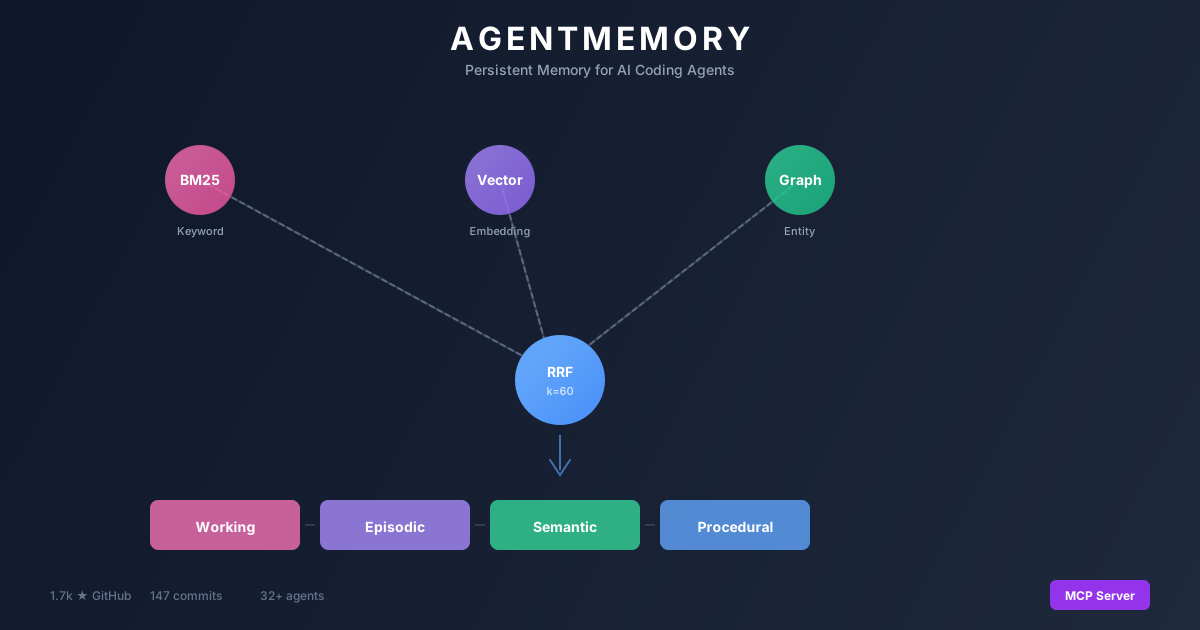
A deep dive into the 4-tier memory consolidation model and triple-stream retrieval system that makes agentmemory the most sophisticated memory system for AI agents.
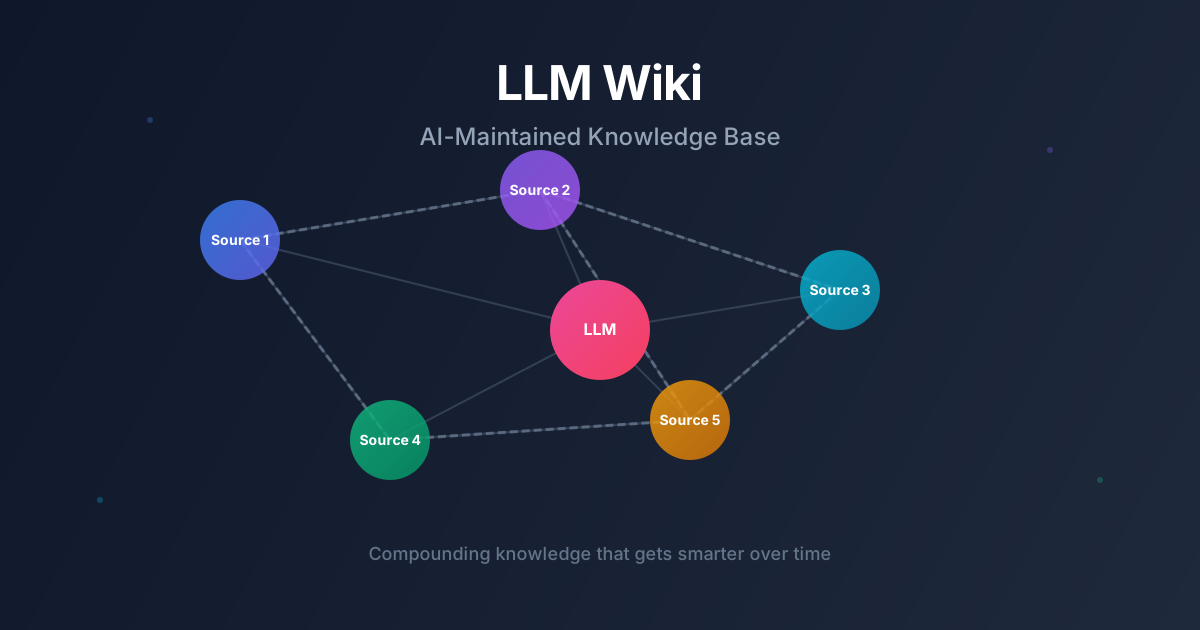
Andrej Karpathy's LLM Wiki pattern — a persistent, compounding knowledge base maintained by AI — hit 5,000+ stars in days. Here's the full architecture, what the community discovered, and the structural gaps that could make it collapse.

Understand RAG vs Long Context, decode the acronyms (CAG, KV Cache, RLMs), and learn how to build a local RAG agent with zero ongoing costs.
A developer's guide to building a Palantir-like system using open-source tools: Kafka for data ingestion, Spark for stream processing, Neo4j for knowledge graphs, and LLMs for autonomous agents.
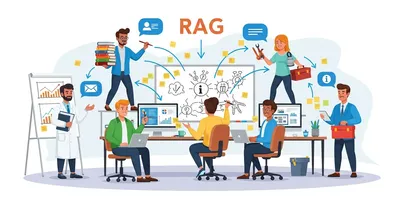
Explore 11 key RAG strategies including re-ranking, agentic RAG, knowledge graphs, and contextual retrieval to enhance your AI agents' performance and accuracy.