Gemma 4 12B: MTP Speculative Decoding and RAG for Faster Local Inference
· 5 min read
How Gemma 4 12B combines encoder-free multimodal design, MTP speculative decoding, and RAG to run OCR and document Q&A on consumer hardware.
30 articles in this category
How Gemma 4 12B combines encoder-free multimodal design, MTP speculative decoding, and RAG to run OCR and document Q&A on consumer hardware.
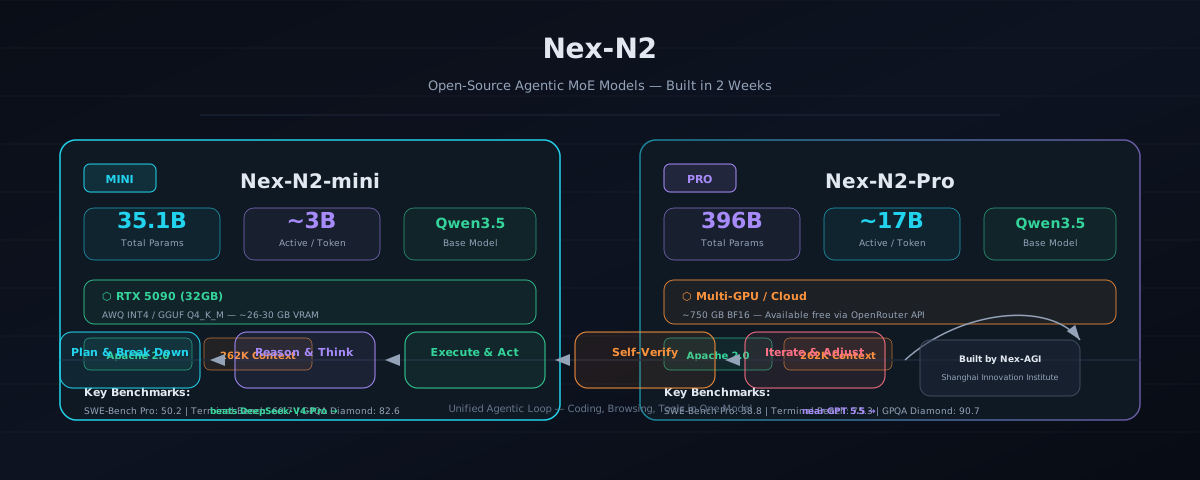
A deep dive into the Nex-N2 model family from China's SII-backed Nex-AGI alliance. Benchmarks vs GPT 5.5 and Opus 4.7, who's behind the startup, and how to run the 35B mini variant on an RTX 5090.
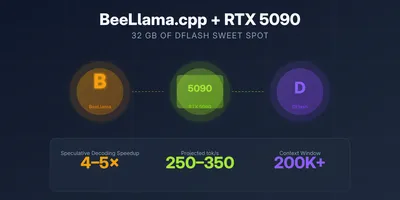
BeeLlama.cpp is a llama.cpp fork that adds DFlash speculative decoding, TurboQuant/TCQ, MTP, and more. How it works, the RTX 5090's 32 GB advantage, and what we can expect in tok/s on the latest Blackwell hardware.
Real-world tests of Qwen3.6 27B on RTX 5090 with 32 GB VRAM — benchmarks, llama.cpp/vLLM/sglang setups, NVFP4 + MTP tuning recipe, and the CUDA 13.2 gotcha that produces gibberish.
Real-world tests of Gemma 4 12B Quantization-Aware Training for coding tasks — benchmarks, llama.cpp/vLLM/sglang setups, VRAM requirements, and the critical pitfalls nobody mentions.

Comprehensive benchmark and optimization of Qwen3.6-27B on RTX 4090 through quantization, MTP speculative decoding, DFlash diffusion-based acceleration, DDTree branching, and TurboQuant KV cache compression.

A deep dive into why local language models get trapped in infinite repetition loops and how to fix them using optimized sampler configurations.

How to build a capable local coding agent using small LLMs (Qwen3 8B, Gemma3 12B) augmented with Context7 for up-to-date documentation, semantic RAG for project context, and agent memory frameworks for persistent knowledge.
How to run Qwen 3.6 35B-A3B on a GTX 1060 with just 6GB VRAM using llama.cpp, MoE offloading, and five critical flags — boosting speed from 3 to 17 tokens/sec.
A deep dive into my Pi Coding Agent setup: models, extensions, skills, agents, and configuration.
How block diffusion speculative decoding with DFlash, vLLM, and Gemma 4 26B MoE achieves 600 tokens per second on consumer GPU hardware.
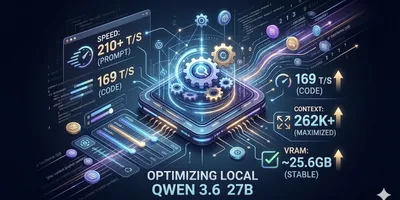
A complete guide to tuning beellama.cpp for maximum context, stable tool calling, and high-speed speculative decoding on a single 32GB GPU.

Practical guide to choosing GPUs and inference engines for LLM deployment — covering quantization, benchmarking vLLM vs SGLang vs TGI vs NIM, and cost analysis across A40 through H100.
Run the 80B MoE Qwen3-Next locally using llama.cpp with selective FFN layer offloading to CPU. Unsloth UD-Q4_K_XL quantization + regex-based -ot flag lets you maximize GPU usage while keeping MoE expert layers in system RAM.

Run Qwen3.5-27B at 3.43x autoregressive speed on a single RTX 3090. Lucebox's DFlash port brings block-diffusion speculative decoding to GGUF — build, download weights, and start generating in under 20 minutes.
Google released official MTP drafter models for Gemma 4. A small companion model guesses tokens ahead, the big model verifies — same quality, nearly 3x speed on the same hardware.
Five working tricks + one failed trick + one upcoming trick for running Qwen 3.6 35B on an 8-year-old GTX 1060.
A comprehensive survey of non-NVIDIA AI chips available today — TPUs, NPUs, custom ASICs, and wafer-scale engines — from AWS Trainium3 to Cerebras WSE-3, Google TPU v6 Trillium, Korea's NPU startups, and optical interconnect upstarts.
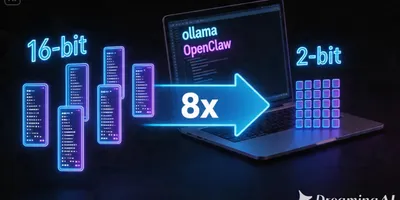
Turbovec achieves 8x memory compression for RAG embeddings via TurboQuant quantization, enabling fully local agentic workflows with OpenClaw and Ollama on consumer hardware.

A practical walkthrough of using structured synthetic data, Unsloth fine-tuning, and a simple harness to turn a tiny base model into a fast local specialist.
A single CUDA kernel for all 24 layers of Qwen 3.5-0.8B delivers 1.87 tok/J on an RTX 3090, matching Apple's M5 Max at 2x the throughput.
54 comments from developers running Gemma 4, Qwen 3.5, and other local models — the hardware, the benchmarks, the frustrations, and the wins.
How to use Gemma 4 as a local OCR engine — processing images and PDFs through Ollama with vision models, no cloud APIs needed. Covers the architecture, TurboQuant's impact on long-context document processing, and a practical Python implementation.
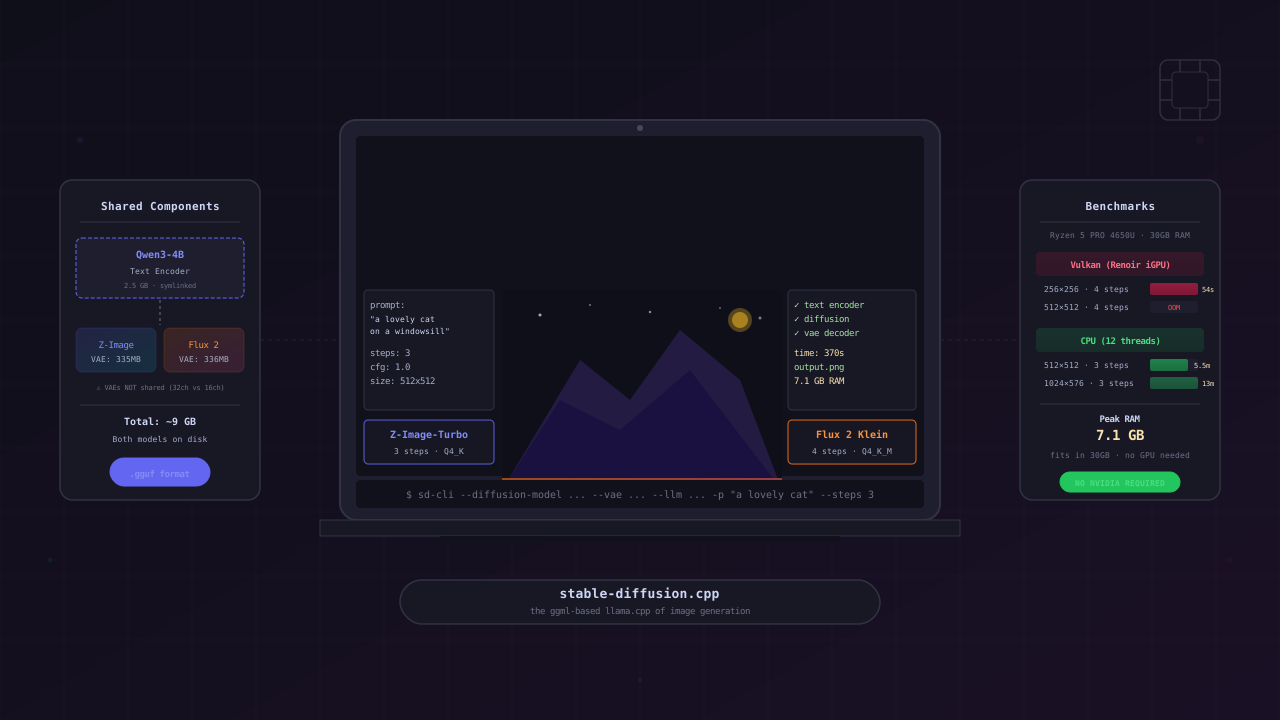
Two of the newest distilled diffusion models — Z-Image-Turbo and Flux 2 Klein 4B — both run locally on AMD integrated graphics and CPU using stable-diffusion.cpp. No NVIDIA GPU required. We benchmark both on a Ryzen 5 PRO 4650U and show how they share the same text encoder to save disk space.
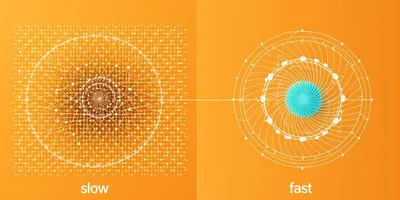
How RotorQuant replaces Turbo Quant's expensive 128x128 matrix rotation with Clifford algebra rotors — 44x fewer parameters, 10-19x faster on CUDA, matching attention fidelity on real models.

A deep dive into Google's Turbo Quant KV cache compression — from the theory of 3-bit compression vs 4-bit, through dense vs MoE context scaling experiments, to a full llama.cpp benchmark with FP16, Q4, and Turbo Quant head-to-head.

Getting llama.cpp to work on an AMD Ryzen 5 PRO 4650U with integrated Vega graphics — no NVIDIA, no CUDA, no ROCm. Just Mesa RADV and the Vulkan backend.
Generate images locally using Stable Diffusion on nothing but your CPU. FastSD CPU uses Latent Consistency Models and OpenVINO to produce 512x512 images in under a second on a modern processor — no $5,000 GPU needed.

A practical guide to building local AI systems focused on VRAM—the key bottleneck for running AI models locally at usable speeds.
How to repurpose a Tesla V100 SXM2 AI accelerator from a DGX server into your home workstation for running local LLMs at a fraction of GPU costs.